
How Do I Know if It’s Sinus Issues or Just Allergies?

December 20, 2022

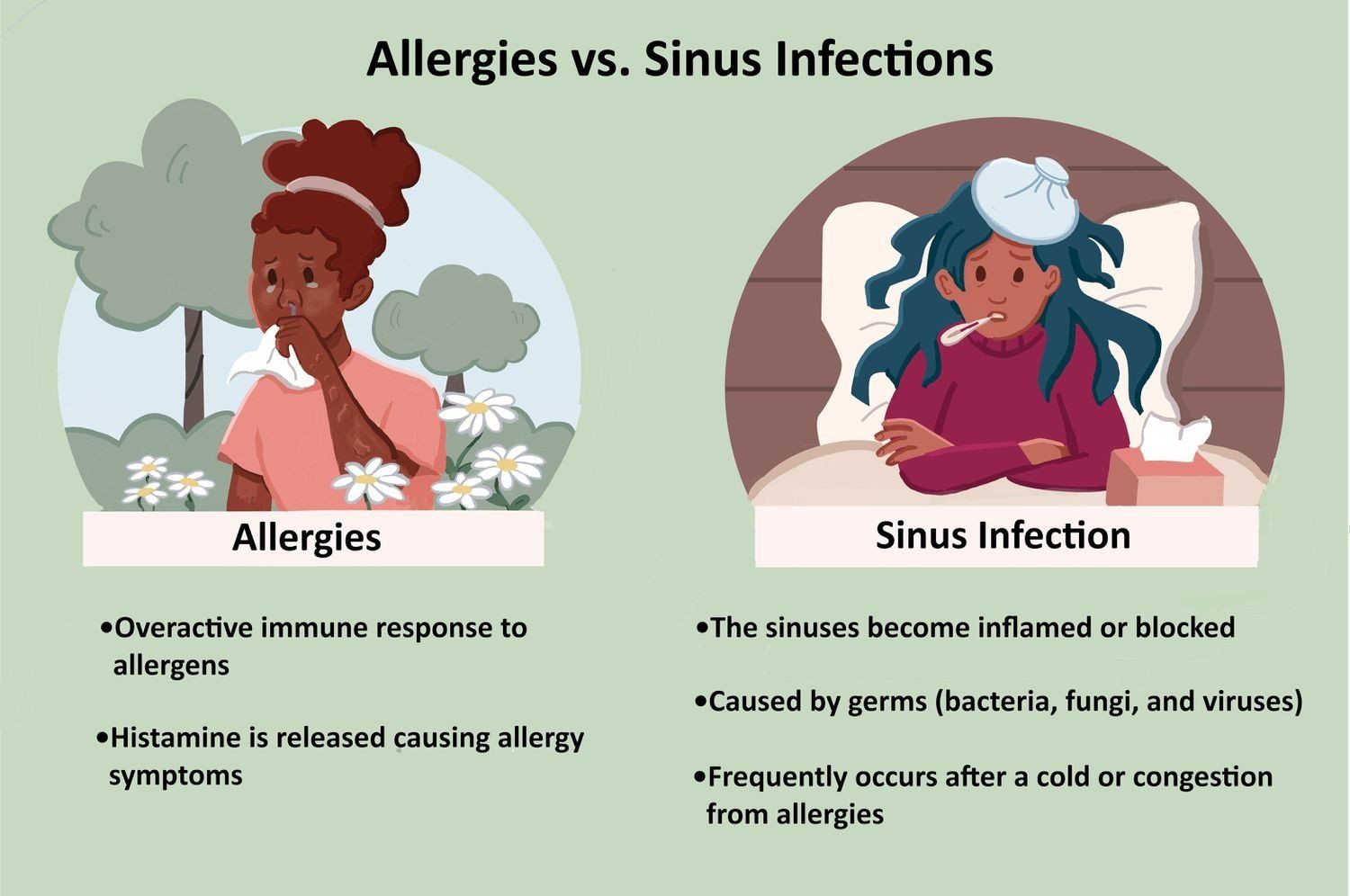
There are a few key ways to tell the difference between sinus issues and allergies. One is the itchiness of your eyes and skin that can occur with allergies, as well as the presence of watery eyes. If you have a stuffy nose, congestion, and pain or pressure in your face, it's more likely you're suffering from sinusitis. However, if you have a runny nose and sneezing, it's more likely that you have allergies.

Allergies vs Sinus Infections

Symptoms

If you're wondering whether your runny nose and watery eyes are due to allergies or a sinus infection, there are key differences in symptoms. Allergies typically cause itchiness in the eyes and skin, while sinus infections usually cause pain or pressure in the face. If you have a weak immune system, you're more likely to develop a sinus infection. Treatment for allergies typically involves avoiding triggers and taking over-the-counter medications, while treatment for a sinus infection may require antibiotics.


Causes

If you’re not sure whether your sinus issues are caused by allergies or a sinus infection, there are a few key ways to tell the difference. Allergies typically cause itchy, watery eyes, while a sinus infection can cause pain or pressure in the face. Other symptoms like a runny nose, congestion, and sneezing can be caused by both allergies and a sinus infection. If you’re still unsure, your best bet is to consult with a doctor who can take a detailed medical history and perform a physical examination.


Allergy Testing

If you're not sure whether your symptoms are caused by a sinus infection or allergies, there are tests that can help confirm the diagnosis. A sinus CT scan or sinus imaging can help doctors see the anatomy of the sinuses and look for signs of infection. Allergy testing involves exposing a person to small amounts of allergens and observing the body's reaction. Skin prick testing is the most common type of allergy test. If you have allergies, your doctor may also recommend avoiding triggers and taking medications to relieve symptoms.


Treatment

If you're not sure whether your runny nose and congestion are due to allergies or a sinus infection, it's important to see your doctor for proper diagnosis. While the two conditions share many symptoms, there are key ways to tell them apart. Seasonal allergies will typically cause itchy, watery eyes along with other symptoms, while a sinus infection is more likely to cause thick nasal drainage, altered smell, and nasal obstruction. Treatment for the two conditions is also different - allergy sufferers can find relief with antihistamines and nasal sprays, while those with sinusitis may need antibiotics or even sinus surgery.


When to See a Doctor

The symptoms of allergies and sinusitis can be very similar, making it difficult to figure out which one you might have. Both can give you a stuffy nose. If it's allergies, you may also have: runny nose, watery eyes, itchy eyes or throat. Sinus infection symptoms may occur in both acute and chronic forms. One way to distinguish allergies from a sinus infection is itchiness around the eyes. Eye itchiness is very rarely a symptom of a sinus infection. If you develop symptoms that aren't typical for you or if symptoms don't get better with over-the-counter remedies, it's best to see a doctor so they can properly diagnose and treat your condition.


Snot Force Alliance Inc brings specialists together to treat nose, sinus, and airway-related conditions. We offer various collaborative opportunities for medical experts, clinics, and researchers. If you would like to learn more about clinical trials, contact us.



September 22, 2026
Inflammatory airway diseases can impact a patient's quality of life. Untreated conditions leave patients struggling to breathe, coughing regularly, and feeling unwell for months at a time. Airway disease management has undergone significant changes in recent years. Treating airway diseases has become increasingly complex, despite improvements in methodologies and technologies. In rural and underserved regions, many patients lack access to specialty care. Key Takeaways: Providing high-quality care to patients with airway disease requires collaboration across specialties. It is important to expand rural ENT access and access to multidisciplinary clinics. Clinicians in rural communities can improve patient outcomes through collaborations and with creative solutions that expand airway care. The Need for Multidisciplinary Airway Care Airway diseases affect multiple systems of the body and thus are treated by different types of physicians. Allergists, primary care doctors, pulmonologists, and ENT physicians all play a role in caring for patients with airway conditions. Physicians who can facilitate multidisciplinary care can improve diagnostic accuracy while also helping to ensure better patient outcomes. Challenges in Rural and Underserved Communities Rural ENT access is spotty at best. Many rural areas lack specialty physicians and often, patients must travel long distances to tertiary medical centers where they receive care. As a result, patients with limited transportation options may experience delays in diagnosis and care. Sometimes, these specialty care disparities can leave primary care providers to manage complex airway conditions on their own. In areas where insurance coverage is limited, and referral networks are fragmented, patients may struggle with their conditions without treatment at all. The Consequences of These Limitations Delays in diagnosis and treatment mean poor management of chronic conditions and increased reliance on treatment from acute care settings. Under this system, patients become frustrated as they lean on ineffective treatment methods. Methods for Expanding Access There are many methods for expanding access to patients in rural and underserved areas. Telehealth Airway Care The use of telehealth treatment has significantly expanded in recent years. With telehealth tools, hybrid care models combine in-person and virtual visits. This same technology also connects doctors, bringing together specialists and community clinicians. Regional Centers of Excellence Multidisciplinary airway centers have proven effective for helping patients access specialty care. Airway centers make it easier to streamline referrals in complex cases. These airway centers can serve larger geographic areas by setting up outreach clinics in surrounding communities. Collaborative Networks Partnerships and collaborations between physicians are key to ensuring that primary care providers in underserved areas have access to resources and information. Supporting Rural Physicians There are many ways to support rural physicians. Snot Force has committed to build networks for physicians, helping to ensure the dissemination of information across specialties and practice settings. We facilitate collaboration between disciplines to promote innovation in care for underserved communities. We're bringing doctors together to break down specialty care disparities and improve rural ENT access and information. Our research collaborative depends on many medical professionals to participate, and we're always looking for more physicians to join the force. To learn more, contact Snot Force today .
doctors discussing how AI helps
September 10, 2026
Explore the ethical considerations of AI-guided airway care, including clinical judgment, patient consent, bias, safety, data privacy, and validation.
Unified airway awareness logo
August 25, 2026
Discover how biologics, multidisciplinary care, and precision medicine are shaping the future of unified airway care and chronic airway disease management over the next five years.
anatomy-of-paranasal-sinuses-and-trachea-airway-3d-illustration
August 11, 2026
Explore emerging tools in functional airway assessment, including quantitative CT, airway imaging, airflow modeling, and advanced sinus diagnostics shaping the future of ENT and airway care.
A doctor reviewing a patient chart on a clipboard, representing clinical decision-making for chronic
July 28, 2026
Compare surgery, biologics, and medical management for chronic sinusitis. Learn how clinicians choose the best treatment for CRS and nasal polyps.
Woman in a face mask holding a flower to her nose, illustrating smell loss from chronic sinusitis.
July 16, 2026
Learn why smell loss in chronic sinusitis may signal severe airway disease, nasal polyps, or eosinophilic inflammation, and explore today's treatment options.
doctors training each other
July 7, 2026
Learn why interdisciplinary training in CRS, asthma, biologics, and airway inflammation is essential for preparing clinicians to diagnose and manage complex airway disease.
a group of physicians in a meeting
June 26, 2026
Learn how standardized communication across ENT, allergy, pulmonology, and GI specialties improves care coordination, teamwork, and patient outcomes.
participants-learning-new-ultrasound-techniques-on-medical-congress
May 26, 2026
Discover how translational airway research improves real-world patient care through collaboration, innovation, and evidence-based sinus treatment. Learn how Snot Force helps physicians bridge the gap between airway science and clinical practice.
doctor-team-analyzing-health-charts-for-effective-patient-care
May 12, 2026
Explore the differences between objective measures and patient-reported outcomes in sinonasal disease. Learn how ENT doctors can improve sinus disease assessment by combining clinical data with real-world patient experiences.